- Separation Support
- Counselling
- Mental Health Support
- Relationship and Sexuality Education
- Relationship and Parenting Courses
- First Nations Services
Social media ban
The social media ban has sparked strong reactions from families, schools and young people alike. While it aims to reduce risk, it also raises questions about what young people need to develop safely in a digital world. Understanding whether the social media ban is working involves looking beyond restriction alone, and considering how connection, resilience and digital skills shape young people’s wellbeing over time.
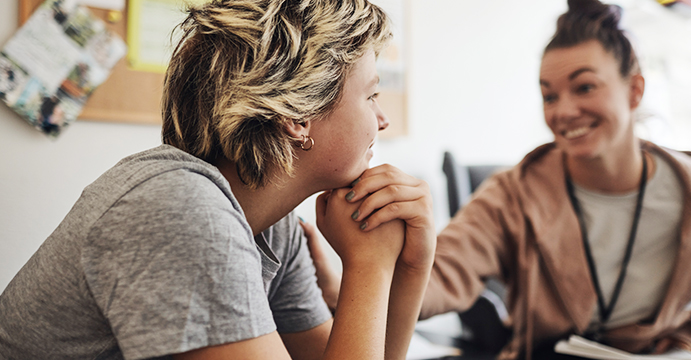
Australia’s social media ban, which came into effect on 10 December 2025, is a world-first attempt to limit children under 16 from holding social media accounts. The move reflects growing concern among parents, educators and policymakers about the impact of social media on young people’s wellbeing.
But the question many families are asking is simple: will the social media ban actually work in helping young people feel safer, happier and more connected?
Social media can expose young people to cyberbullying, harmful content and online exploitation that may contribute to mental health challenges. At the same time, it can also provide benefits such as social connection, peer support and a sense of belonging, particularly for marginalised young people who may struggle to find those communities offline.
Interrelate’s Practice Specialist in School Services, Kristy Turnbull, says it's too early to assess whether the ban is working. She believes that while it may reduce some risks, it cannot solve the issue on its own.
‘Children’s mental health and resilience are not built simply by removing risk and keeping them safe,’ she explains. ‘Young people still need opportunities to learn how to manage emotions, navigate friendships and build healthy relationships in a world that will always include technology.’
What is the ban trying to do, and will the social media ban work to reduce harm?
At its core, the social media ban aims to reduce risks by limiting children’s exposure to harmful content, online conflict and social pressures that often exist on social platforms.
Those concerns are grounded in broader trends that families and schools have observed over the past two decades. Rates of anxiety, distress and self-harm among young people have risen significantly during the same period that social media has become embedded in everyday life.
‘From the early 2000s, we’ve seen anxiety and self-harm increase dramatically,’ says Kristy. ‘Those numbers have continued to climb, so the intention behind the ban is to reduce some of those risks and hopefully slow that trend.’
Supporters believe removing access to social media during key developmental years may help protect young people from harmful online experiences. However, Kristy cautions that time online is only one part of the picture.
‘How young people use online platforms is just as important as how much time they spend on them,’ she says.
This means the ban may reduce exposure to certain risks, but it will not automatically improve wellbeing unless young people are also supported to develop healthy digital habits, emotional awareness and strong relationship skills.
Why the social media ban is good, and why it isn’t enough on its own
There are clear potential benefits to restricting social media access, particularly for younger children who may not yet have the emotional maturity to manage the pressures, comparisons and social conflict that often occur online.
For some parents, the ban may even make difficult conversations easier.
Kristy says the policy can help relieve pressure on families who feel they are constantly negotiating with children about when and how social media should be introduced.
However, she emphasises that restriction alone does not build resilience.
‘Resilience develops through experience,’ she says. ‘Young people need opportunities to practise social skills, manage disagreements and learn how to respond to unhealthy behaviour in constructive ways.’
In other words, removing access to a platform does not automatically equip children with the skills they need to navigate relationships or online environments.
Young people still need education in digital literacy, emotional regulation and communication skills so they understand how to behave responsibly both online and offline.
‘Children will still be online in other ways,’ Kristy explains. ‘So they need to understand concepts like digital footprints, respectful behaviour and online safety. The social media ban may help, but it needs to be part of a broader conversation about digital literacy and healthy relationships.’
Why is the social media ban good if kids can just get around it?
One of the biggest challenges facing the ban is enforcement. Restrictions do not always stop behaviour entirely, and some young people may attempt to bypass them by creating alternative accounts or using platforms through friends or even their parents.
Kristy says this is already happening in some cases.
‘Many of the young people I hear about who are supposed to be restricted from social media are still finding ways to access it,’ she says.
However, this does not necessarily mean the policy is ineffective. Instead, it highlights the need for broader cultural change. Kristy compares the shift to the introduction of mandatory seatbelts decades ago.
‘When seatbelts were first introduced, there was a lot of resistance,’ she explains. ‘People argued it was unnecessary or intrusive. But over time, it became normal behaviour, and the number of road deaths decreased significantly.’
The same cultural shift could occur with social media restrictions, but it will require consistent messaging from families, schools and technology platforms. Another important factor is that removing social media does not eliminate all digital influences on children’s attention and behaviour.
‘Even without social media, young people still engage with screens in other ways,’ Kristy says. ‘Short videos, messaging apps, gaming and streaming can all create similar patterns of instant reward and distraction.’
For educators, this shift is already visible in the classroom.
‘When we run programs in schools, we have to capture students’ attention very quickly,’ she explains. ‘If we don’t engage them immediately, we lose them, because they’re used to that constant stimulation.’
Identity, connection, and the kids who rely on online communities
While the ban may reduce certain risks, it may also create challenges for some young people who rely on online communities for connection and support. This can include teenagers in rural or remote areas, LGBTQ+ young people, and those with disabilities who may face barriers to social connection in their local communities. Kristy says that for some young people, social media can provide an important sense of belonging.
‘Some teenagers rely on online communities for connection, particularly if they feel isolated in their offline environment,’ she says.
For example, LGBTQ+ young people in smaller communities may use online spaces to connect with others who share similar experiences.
‘Those platforms can allow them to find their people,’ Kristy says. ‘They may use avatars or anonymous profiles so they can explore their identity safely without fear of bullying or exclusion.’
This means the question ‘will the social media ban work?’ cannot be answered in simple terms. Its impact will depend on whether alternative pathways for connection, support and belonging are also available.
What families can do now to support their kids in the digital world – regardless of the social media ban
Regardless of how the policy evolves, there are practical steps families can take now to support young people’s digital wellbeing. Kristy’s approach focuses on strengthening relationships at home rather than relying solely on rules or restrictions.
‘Prioritising connection over control is one of the most important things parents can do,’ she says.
So instead of focusing on keeping children under control, try focusing on connecting deeply with them as a way of strengthening relationships. She also encourages parents to view boredom differently.
‘If your child says they’re bored without social media or screen time, that’s not necessarily a problem,’ she explains. ‘Boredom is often where creativity, imagination and problem-solving begin.’
Simple screen-free rituals can also help build stronger family relationships.
Kristy suggests small daily activities that encourage conversation and connection, such as asking children to share one thing they learned at school each day.
‘It might sound simple, but those moments build confidence and communication skills,’ she says.
Ultimately, the goal is not simply to remove technology, but to help young people develop the emotional and social skills they need to thrive in a digital world.
‘Screen-free time gives children the opportunity to practise empathy, communication and emotional regulation,’ Kristy says. ‘Those are the skills that support healthy relationships throughout life.’
If the social media ban is causing conflict in your home, Interrelate is here to help. We offer counselling for families, counselling for young people and parenting courses.
Related articles
Building resilience in children
Conversations about resilience often raise a deeper question for parents: how much support is too much, and when does protection start to limit growth? As parenting approaches evolve, many families are trying to balance empathy with preparing children for real-world challenges. Understanding how resilience develops can help you support your child in ways that build confidence, emotional strength and the ability to cope with setbacks over time.
Read More
What is psychology and how can it help?
Psychology helps us understand how our thoughts, emotions and behaviours are connected, and how change happens over time. This guide explains what psychology is, what happens in a psychology session, and how evidence-informed support can help you make sense of your experiences and move forward with confidence.
Read More
Should I see a counsellor or psychologist? How to choose the right support
If you’re wondering whether to see a counsellor or psychologist, you’re not alone. Knowing where to start can feel overwhelming. This guide explains the differences between psychologists, counsellors and social workers, helping you understand what kind of support fits your needs and how to take the next step with confidence.
Read More