- Separation Support
- Counselling
- Mental Health Support
- Relationship and Sexuality Education
- Relationship and Parenting Courses
- First Nations Services
The blended family: how to make it work
Blending families can bring hope, but it also comes with real challenges that don’t always get talked about. Different parenting styles, divided loyalties and adjusting to new roles can create tension for both adults and children. Understanding what a blended family really involves, and how to navigate common challenges, can help you set realistic expectations, reduce pressure and build a sense of stability, inclusion and connection over time.

A blended family can be a hopeful new chapter. It can also be messy, noisy and emotionally complicated, especially when children are still adjusting to separation, grief or big changes across two households.
As Glen O’Hara, Practice Lead (Counselling Focus) at Interrelate, explains:
'We used to use the word “step” as a way of describing someone who belonged to a family that wasn’t their birth family. So we had stepfathers and stepmothers. When you look at the root of that word, it relates to “orphan”. Hundreds of years ago, a stepchild was usually someone who had lost a parent. We don’t use that term as much anymore. We tend to use "blended" or "mixed".'
That history matters. Because "blending" sounds like it should be smooth. Real life rarely works that way. But there are practical ways to support a healthy blended family.
What is a blended family, and why it can feel harder than people expect
A blended family is when two adults form a new partnership and bring children from previous relationships into the one family system. In Australian statistics, step-families and blended families are defined differently: blended families include at least one child of both partners and at least one stepchild.
Australian Government data shows that in 2021, blended families and step-families made up about 12 per cent of couple families with dependent children (with blended families around 4 per cent and step-families around 8 per cent).
But the lived experience is often less about definitions and more about expectations.
Glen explains why the term can sometimes be misleading:
‘The only trouble with that term is it can sound like you put a whole family together in a blender and everything mixes perfectly. Families are very different. When you bring two together, it’s rarely a perfect mix. There are usually issues that come up.’
A blended family might form after separation, divorce or the death of a parent. Children may be carrying grief, loyalty conflicts and fears about being replaced. Adults may be carrying stress, guilt or pressure to make it work.
A helpful starting point is to accept that you can be deeply committed to each other and still need time, planning and support to help the family feel safe and settled.
Blended family challenges: the emotional and practical realities
Some blended family challenges are both emotional and practical.
Glen describes the typical collision of different histories and parenting styles:
‘Common emotional and practical challenges come from everyone’s family of origin experiences, including how you parent. Parenting styles, the reasons a previous relationship ended, how long it’s been, how raw it still feels, and the differing needs of everyone in that family all make a difference.’
On the practical side, the challenges can be equally complex:
‘Practically, there are financial pressures, questions about space, money and time. There’s scheduling time with other parents, getting everyone to school. It can feel quite chaotic.’
If you’re feeling overwhelmed, it doesn’t mean your blended family is failing. It often means you’re doing something genuinely complex.
Common pressure points include:
Space and belongings – bedrooms, beds, privacy and ‘where do I fit?’
Two-household logistics – school routines, handovers, sport and holidays
Divided loyalties – children feeling they’re choosing one parent over another
Different parenting styles – discipline, screens, bedtime, manners, language
New relationships everywhere – multiple adult-child and child-child relationships at once
Blended family problems and how to create safety without forcing closeness
Many blended family problems arise when everyone is trying hard, but the pace is too fast, or the expectations are unrealistic.
One of the most protective ideas Glen shares is this: respect can come before love.
‘Repartnering usually needs to be done slowly,’ he says. ‘It needs to be clear with both the partner and the child that you expect them to respect each other, but they don’t have to love each other instantly. Resetting expectations is important. Sometimes we say go at the child’s pace.’
That ‘child’s pace’ principle can help ease jealousy, uncertainty and loyalty conflicts.
Practical ways to help children feel valued and heard include:
• Keep a direct line between each child and their biological parent (regular check-ins that don’t depend on the whole household mood).
• Protect one-on-one time with each child, even when life gets busier.
• Name feelings without judgement, then get curious about what would help.
• Let relationships build through low-pressure time together, not big talks every week.
When emotions run high, Glen’s approach is grounded and compassionate:
‘It’s about hearing the emotion, validating it and normalising it. Then asking what would help. It’s not about correcting behaviour. It’s about understanding the need behind it and helping the child feel secure, valued, loved and accepted.’
How to make a blended family work when parenting styles and rules don’t match
If you’re wondering how to make a blended family work, start with the adults. Parenting differences need to be discussed early and openly.
‘Parents joining together need to put this on the agenda very early, even before they move in together,’ Glen says. ‘Ask: how are we going to do this? How are we going to manage this? What are our expectations?’
Before trying to solve issues with the children, partners can discuss:
• What role do you want me to play with your child?
• Who handles which situations (comfort, conflict, consequences)?
• When do we defer to the biological parent, and when do we act as a team?
• How will we give each other feedback without taking it personally?
• What does ‘going well’ actually look like for us?
When setting household expectations, keep them simple and fair. Children need time to adjust.
Small signals of inclusion also matter. For example:
• Display photos of all the children in the home, not only the ones who live there full-time.
• Make sure each child has a genuine space (a bed, storage, privacy).
• Create predictable routines (meals, school mornings, wind-down time).
• Use family meetings occasionally to solve practical issues, not to pressure closeness.
And don’t underestimate the power of ordinary fun. Shared time builds trust.
Blending families: when to get extra support and what Interrelate can do
Sometimes blending families brings up challenges. This can be especially true where there is trauma, high conflict, domestic and family violence, or complex child needs. Glen explains:
‘Extra support is needed when there are factors that aren’t easily resolved just by talking through expectations. It might mean seeing a counsellor for strategies. It might mean parents coming to counselling together to work out how to navigate issues, rather than bringing everyone into the room.’
He also emphasises an important boundary:
‘We say at Interrelate: keep the adult business and the child’s business in different corners. Try to separate them.’
Children shouldn’t carry adult issues such as finances, legal disputes or inheritance concerns.
Blended families can absolutely thrive, but they often benefit from structured support, especially during major transitions.
At Interrelate, we work with individuals, couples and families to build a culture of listening, reduce conflict and strengthen connection through change.
‘Blended families are definitely people who can come to us for counselling, individually or together,’ Glen says. ‘We normally work individually at first to help people understand that it’s not about fixing everyone. It’s about setting up a culture of hearing and listening.’
If your family is navigating change, we offer counselling for individuals, couples and families, as well as family dispute resolution and parenting support. Whether you’re adjusting to a new partnership, working through parenting differences or supporting children through separation, our experienced practitioners can help you build the foundations of a stable, supportive family environment.
You may also be interested in

Counselling
Counselling is a proactive step towards wellbeing. Our counsellors can support you and your family as you look to nurture what is most important - your relationships.
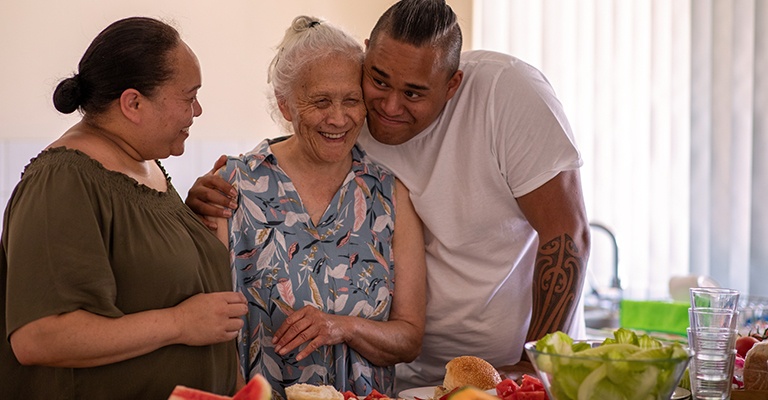
Counselling for Families
There's no roadmap when it comes to family. Family relationship counselling can provide your family with information, tools and strategies to help create a stronger and more harmonious family environment.
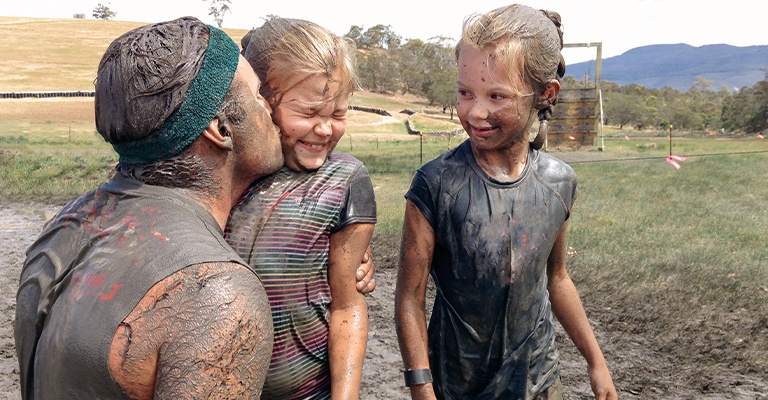
Relationship and Parenting Courses
Our courses are designed to give you the building blocks to support healthy family relationships. We have courses tailored to various life stages and situations, empowering you with knowledge and insight to help guide you towards relationship wellbeing.
Related articles

How to be a resilient family
When families face stress, change or unexpected challenges, the way they cope together can shape long-term wellbeing. It's not always easy to know what helps some families adapt while others struggle. Family resilience offers a way of understanding how connection, support and routine help families recover. Learning how to build resilience can help families navigate life's challenges with greater confidence.
Read More
Going no contact with parents
Deciding to step back from a parent can feel confronting, especially when family relationships carry deep history, expectations and emotion. You may be weighing up your wellbeing against a sense of obligation or wondering whether distance is the right path. Understanding why people go no contact with parents, and how to approach that decision thoughtfully, can help you reflect more clearly and navigate complex family dynamics with care.
Read More
It’s time to stop the ‘Birds and the Bees’ talk – here’s why
If you don’t talk about sex, the internet will. The birds and the bees talk is failing today’s kids. If you’re still having “the talk”, you’re already too late. Find our why your child has already seen more than you think
Read More