- Separation Support
- Counselling
- Mental Health Support
- Relationship and Sexuality Education
- Relationship and Parenting Courses
- First Nations Services
Co parenting after divorce
When parents separate, decisions about children can become complex and emotionally charged. It’s not always easy to understand what children are experiencing or how to include their perspective safely. Child-inclusive mediation offers a structured way to bring children’s voices into the process without placing responsibility on them. Understanding how this approach works can help families make more informed, child-centred decisions during separation.

Co-parenting after divorce or separation is one of the most important transitions a family can navigate. While the adult relationship may have ended, the parenting relationship continues. How parents manage that shift can significantly shape children’s wellbeing, development and sense of security.
Martin Meszaros, Practice Lead (mediation focus) at Interrelate, describes co-parenting in simple, practical terms: ‘Co-parenting in very simple language means sharing the responsibility of bringing up our children. It’s where separated or divorced parents continue to work together, regardless of whether they live separately or are separated under one roof.’
At its heart, healthy co-parenting after divorce or separation is about keeping children at the centre of decisions, even when emotions are still raw.
What co-parenting after divorce or separation really means
After separation, parents often move from being partners to being parenting colleagues. That shift can feel uncomfortable, especially if there is unresolved hurt, conflict or disappointment.
Martin explains that one of the most helpful mindset changes is learning to separate what he calls the ‘partner bubble’ from the ‘parent bubble’. ‘You are no longer partners, but you will be parents for the rest of your life,’ he says.
This distinction is powerful. It allows parents to acknowledge that while the adult relationship has changed, the shared responsibility for their children remains.
Separation or divorce and co-parenting can involve:
-
creating clear co-parenting arrangements
-
establishing routines across two homes
-
agreeing on communication guidelines
-
making decisions about education, health and activities
-
managing transitions between households
It also means recognising the impact of divorce or separation on children. Research consistently shows that it is not separation itself that most affects children, but ongoing, unresolved parental conflict. As Martin notes, ‘Building a healthy co-parenting relationship is really about keeping the focus on children and finding pathways to work together, even if the adult relationship has ended.’
When parents are able to work cooperatively, children are more likely to feel secure, supported and free from divided loyalties.
Building healthy co-parenting after divorce
There is no single ‘perfect’ model for successful co-parenting after divorce or separation. Families differ. Children differ. But there are practical principles that support stability and emotional safety.
Martin highlights several core strategies:
‘Put the children’s needs at the forefront of your thinking. Make sure they get emotional support from both parents and have a chance to share their feelings in an age-appropriate way.’
He also emphasises respectful communication. ‘Talk about the children, not about the other parent. And never use children as messengers or speak negatively about the other parent in their presence.’
Consistency matters too. While parents may have different parenting styles, predictable routines help children feel grounded. ‘Keeping routines and expectations somehow consistent across both homes helps children know what to expect,’ Martin explains. ‘It helps them move between households without feeling stuck in the middle.’
Practical tips for co-parenting after divorce include:
-
agreeing on bedtimes, homework expectations and screen rules
-
using shared calendars for school and activities
-
establishing clear communication channels, such as email or parenting apps
-
being flexible when unexpected changes arise
-
encouraging children’s relationship with the other parent, where it is safe
Flexibility is particularly important. ‘There needs to be a willingness to adapt things as they unfold,’ Martin says. ‘And some acceptance that each parent may do things differently, as long as it’s safe and appropriate.’
When parents shift from competing to collaborating, the co-parenting relationship becomes less about fairness and more about quality.
‘Rather than focusing only on quantity of time, mediation can help parents explore what an appropriate, functional, secure relationship with their children might look like,’ Martin says.
Navigating holidays, new partners and sensitive moments
Some of the most challenging aspects of co-parenting after divorce arise around special occasions and new beginnings.
School holidays, birthdays, Christmas and cultural celebrations can all carry emotional weight. Martin explains that in mediation, parents often work through practical details such as changeover times, backup plans if arrangements fall through, and how costs will be shared.
‘There are a lot of things to consider,’ he says. ‘Parents talk about who does what, when and where. What happens if arrangements aren’t working? How do we communicate lateness? What are the alternatives if plans change?’
Travel adds another layer. Discussions may include consent for domestic or overseas travel, passport arrangements and how contact will be maintained while children are away.
Introducing new partners is another sensitive milestone. ‘One parent may be further along in the separation process,’ Martin says, ‘while the other is still experiencing emotional upheaval. In that context, introducing a new partner can feel confronting.’
He encourages empathy and clarity. ‘It’s helpful to anchor these conversations in what children need most, which is stability and predictability. Children benefit from having consistent, reliable adults in their lives rather than a revolving door of new people.’
Some families agree on timeframes before introducing a new partner. Others discuss whether the other parent would like to be informed in advance. Importantly, mediation can also unpack nuanced concerns, such as what children choose to call a new partner and what that means emotionally for everyone involved.
Clear boundaries in co-parenting are not about control. They are about protecting children’s sense of safety and belonging.
The impact of divorce on children and when to seek support
Understanding the impact of divorce or separation on children is essential for effective co-parenting. Children of different ages respond differently.
‘All children respond to conflict in different ways, depending on their age and developmental stage,’ Martin explains. ‘Some may appear to go backwards for a period of time. That can be a sign they’re trying to make sense of what’s happening.’
Across all age groups, children benefit from:
-
clear, predictable care arrangements
-
age-appropriate explanations
-
reassurance that the separation is not their fault
-
protection from adult conflict
-
opportunities to express feelings
‘Children often need repeated reassurance that they’re loved by both parents,’ Martin says. ‘And that although mum and dad are no longer together, they will both remain in their lives.’
Extra support can be helpful when communication becomes reactive rather than responsive, or when discussions go in circles without resolution.
‘Mediation allows parents to slow things down and clarify what really matters,’ Martin explains. ‘It moves families away from being told how arrangements should look, towards making their own arrangements. That can be far more empowering and more likely to succeed.’
At Interrelate, we see every day how divorce or separation affects children, and how the right support can help families rebuild stability and connection. Families can access a range of supports, including family dispute resolution, counselling and specialised parenting programs. These programs help parents better understand children’s developmental needs and build practical skills for co-parenting after divorce.
When parents are future-focused and child-focused, the dynamics often shift. As Martin says, ‘If parents focus on the matter they’re grappling with, rather than on one another, the dynamic can move from reactive and competitive to side-by-side problem solving.’
Moving forward with confidence and care
Co-parenting after divorce or separation is rarely simple. It requires maturity, flexibility and a shared commitment to children’s wellbeing. But with structure, respectful communication and the right support, families can build cooperative, stable arrangements that allow children to thrive.
At Interrelate, we offer mediation, counselling and evidence-informed parenting programs designed to strengthen co-parenting after divorce or separation and support children through separation. If you would like guidance tailored to your family’s situation, we encourage you to reach out.
You might also be interested in

Parents not Partners
Parents not Partners will set you up for a positive co-parenting arrangement that fosters your children's wellbeing, helping to overcome some of the new challenges of co-parenting after separation.

Building Connections
Nurture healthy relationships with your children as you build workable parenting arrangements, a course developed to provide the knowledge needed to remain focused on your children during separation.
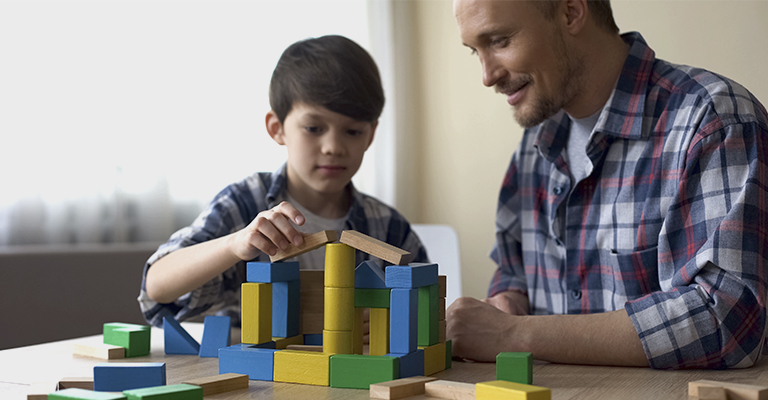
Supervised Visits
Suitable for children, parents and family members who require support to see one another whether due to separation, conflict or safety concerns. Our supervised visits provide the perfect space to nurture positive family connection.
Related articles

Signs your relationship is unhealthy
Most relationships experience challenges, but sometimes patterns begin to feel unbalanced, unsafe or emotionally draining. You might notice a loss of connection, ongoing tension or a sense that your needs are no longer being met. Understanding the signs your relationship is unhealthy can help you make sense of what you’re experiencing, recognise early warning signs and decide what kind of support or next steps may be right for you.
Read More
Effects of divorce on children: how to support them through separation
When parents separate, children often experience a mix of emotions that can be difficult to understand or express. You may be wondering how much to say, what they need most, or how to protect their wellbeing through change. Understanding the effects of divorce on children can help you respond with greater confidence, reduce stress and create a sense of stability that supports their emotional and developmental needs over time.
Read More
Child-inclusive mediation
When parents separate, decisions about children can become complex and emotionally charged. It’s not always easy to understand what children are experiencing or how to include their perspective safely. Child-inclusive mediation offers a structured way to bring children’s voices into the process without placing responsibility on them. Understanding how this approach works can help families make more informed, child-centred decisions during separation.
Read More