- Separation Support
- Counselling
- Mental Health Support
- Relationship and Sexuality Education
- Relationship and Parenting Courses
- First Nations Services
It’s time to stop the ‘Birds and the Bees’ talk – here’s why
If you don’t talk about sex, the internet will. The birds and the bees talk is failing today’s kids. If you’re still having “the talk”, you’re already too late. Find our why your child has already seen more than you think

Remember the “Birds and the Bees” talk? The awkward summons to the lounge room, the formal tone, the averted eyes, the rushed explanation of reproduction and the human body delivered like a mechanical manual. It was factual, uncomfortable and never to be spoken of again.
For generations of Australian families, that was sex education at home. A single, embarrassed conversation, often wrapped in euphemisms with body parts often named using rhyming slang, followed by silence. The thing is silence carries consequences.
When body parts are renamed in baby language and sexuality is framed as something shameful or secretive, children absorb more than biology. They absorb the discomfort, embarrassment and it leads to confusion.
Cut to 2026, and families have changed, and so has the world our children are growing up in. For 100 years, we have worked alongside Australian families, from post-war households to blended families, same-sex parents, dual-income homes and now digital-age parenting.
Our Practice Specialist for Relationship and Sexuality Education, Kristy Turnbull said the world has moved on and our conversations must too….
Today’s children are growing up in an environment saturated with information through social media, streaming platforms, sexualised advertising, 24/7 news cycles, online gaming chats and more.
Many young people encounter adult themes long before a parent or carer decides it’s “time” for the Birds and the Bees talk. They are exposed to imagery and dialogue that previous generations may not have encountered until late adolescence, and they are often left to interpret it alone.
The problem isn’t curiosity, it’s context. Children are absorbing complex social phenomena, including gender identity discussions, consent language, body image pressures and diverse family structures, while still developing the emotional maturity to process them. If adults wait for “the right moment”, that moment may have already passed.
The Shift: Talk Early and Talk Often
Our approach is simple: stop having one big talk and start having many small ones. Healthy relationship and sexuality education isn’t a single event; it’s an ongoing conversation that evolves with a child’s age and stage.
It’s naming body parts correctly from a young age, answering questions calmly when they arise, discussing respect, boundaries and consent well before dating begins, and normalising curiosity rather than shutting it down. Talking early does not mean overwhelming children with adult information; it means responding developmentally and honestly when questions surface.
Parents and carers don’t need to have all the answers – you can’t! Children benefit most from knowing they can ask a TRUSTED ADULT. Because in the absence of trusted adult conversations, young people default elsewhere – to search engines, social media influencers, pornography, and peers who are equally misinformed.
The digital world does not provide nuanced, values-based education, it provides algorithms and when children rely solely on online sources for information about bodies, relationships and intimacy, the risk isn’t just misinformation, it’s distorted expectations.
Open dialogue at home builds something far more powerful than knowledge - it builds resilience.
Research consistently shows that children who can speak confidently about their bodies and boundaries are better equipped to navigate peer pressure, coercion and unhealthy relationships. We know that confidence reduces shame, language reduces vulnerability and openness reduces secrecy.
The old model of one awkward talk reflected a time when information was scarce and harder to access. Today, information is abundant and what children need is guidance, not avoidance.
Stopping the Birds and the Bees talk doesn’t mean avoiding difficult subjects, it means reframing them from a single, mortifying lecture to a culture of ongoing, age-appropriate dialogue which will help children understand their bodies with pride, not embarrassment. It will build trust so they come to their parents and carers before the internet, and equip them with the language to say yes, no, or I’m not sure.
Leave the birds and the bees in the garden, it’s time to talk early and talk often, even if it feels tricky.
For more information on supporting your child's development, check out our range of Relationships and Sexuality Education Programs offered through schools, ourperiod education resourcesor our Tricky Talks Family Evening Sessions ,which support whole families' learning about these important topics.
You might also be interested in
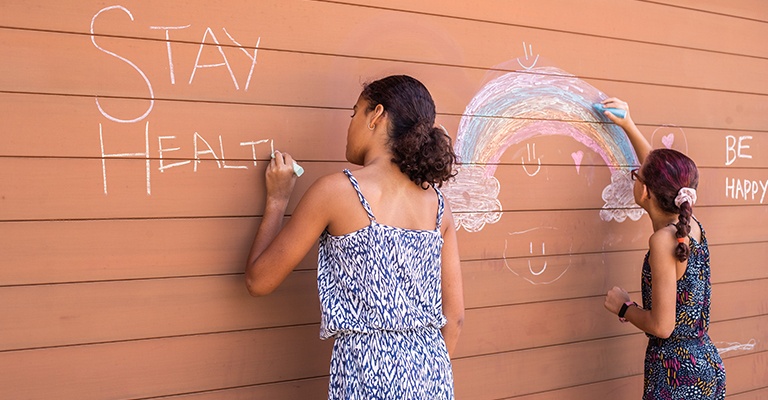
Relationship and Sexuality Education
We're a proud provider of relationship and sexuality education for students and their families. Curriculum aligned, our courses are designed to help build strong, resilient and healthy humans. Supporting healthy human connection from childhood.
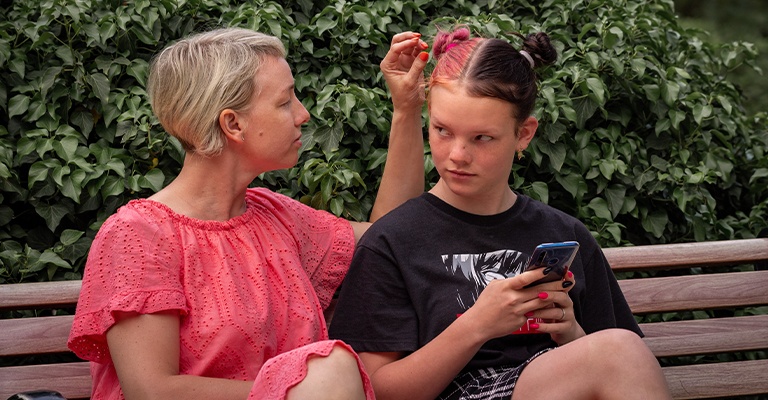
Tricky Talks
Guiding students and their trusted adults to have honest communication about the reproductive system, foetal development, puberty, consent and protective behaviours, so you can navigate this time of development together.

Is it time to have a tricky talk?
Find out tips and register your interest for programs to guide you on how to have honest communication with your children about reproduction and the human body, so you can navigate this time of development together.
Related articles
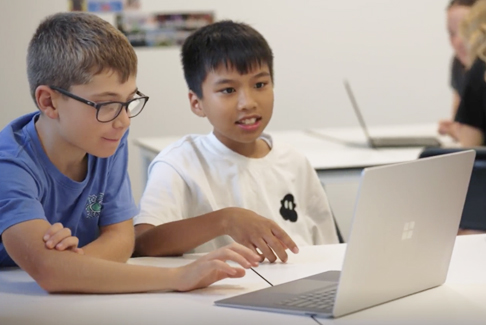
Educating boys about periods – building empathy instead of embarrassment
When it comes to educating boys about periods, the traditional solution to an awkward conversation has been to simply send them away. While the girls stay and learn about menstruation, the boys head off to do something else – quietly absorbing the lesson that periods are private, a bit embarrassing and none of their business. That split has had a cost. Including boys was never about teaching them to menstruate. It’s about empathy, respect and understanding – and raising a generation that treats menstruation as a normal part of life, rather than something to hide, mock or whisper about.
Read More
Why we built a period education project for kids aged 8 to 12
Cringe Quest is the biggest evolution of our primary school menstrual education work in a decade. Launched on 28 May to coincide with Menstrual Hygiene Day, it’s a free, interactive period education project for 8 to 12-year-olds. A choose-your-own-adventure online game, it drops kids into real-life situations most period lessons skip and lets them work out what to say, do and ask along the way. Here’s the why behind it, and the story of how we, as a 100-year-old not-for-profit, ended up building a video game about periods.
Read More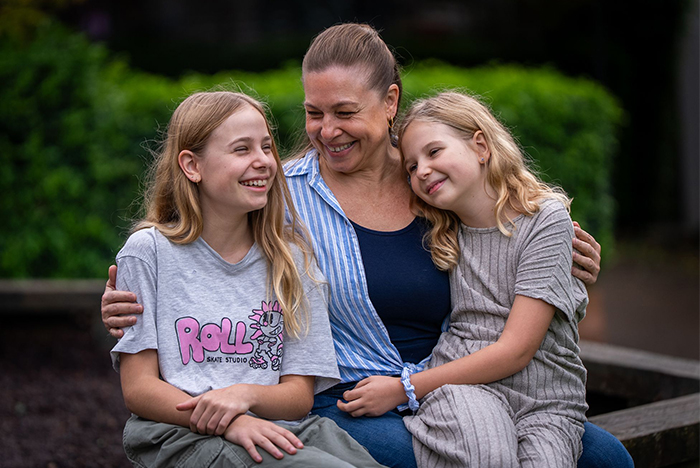
How to talk to your kid about periods (and why you should start before they ask)
Wondering how to educate your child about menstruation? Here’s when to start, what to say and a simple five-step way to talk to your kid about periods. If the thought of explaining periods to your child feels a little daunting, you’re in good company. For many parents, this is a conversation we hope someone else will handle. If you’re a dad, chances are you’ll defer to your child’s mother.
Read More