- Separation Support
- Counselling
- Mental Health Support
- Relationship and Sexuality Education
- Relationship and Parenting Courses
- First Nations Services
How to separate
Separation is rarely one clear decision. It often builds over time, shaped by emotions, practical pressures and uncertainty about what comes next. You might be weighing up what’s best for you, your partner and your children, while trying to minimise harm and conflict. Understanding how to separate with clarity and care can help you approach the process more thoughtfully, make informed decisions and navigate the transition with greater stability and support.

Deciding when and how to separate from a partner or spouse is rarely simple. It’s often emotional, confronting and deeply personal. Whether you’re considering how to separate from your husband, how to separate from your wife, or how to separate from your spouse, the early stages can feel overwhelming.
If you’re searching for guidance on how to separate from your husband or wife in Australia, it can help to understand both the emotional and practical steps involved.
Martin Meszaros, Practice Lead, Mediation Focus at Interrelate, explains that separation marks the end of an intimate partner relationship, whether married or de facto.
‘Arriving at the decision to separate is usually not an easy one, and it is one that comes with so many obstacles that family members really have to face and deal with,’ he says.
While every relationship is unique, certain themes appear regularly. Some couples grow apart. Others experience breaches of trust, differences in values, financial strain or conflicting parenting approaches. In some cases, separation becomes necessary to ensure safety, particularly where there is domestic and family violence, or alcohol and drug misuse.
Whatever the reason, understanding the emotional and practical realities can help you move forward with clarity and care.
The emotional reality of separation when considering how to separate from your spouse
Separation brings a particular kind of grief. Even when the decision feels right, it can carry sadness, anger, relief, guilt or fear – often all at once.
‘Separation brings a very unique kind of grief that family members experience,’ Martin explains. ‘Whether the decision is mutual or initiated only by one partner, people often mourn the loss of the relationship, the shared future they imagined together, and the identity they held together as a couple.’
Importantly, this grieving process is not linear.
‘Parents might feel that they’re already at the stage of acceptance, but then they might fall back into anger or sadness,’ he says. ‘The grieving process itself is not a linear process.’
The emotional landscape can be even more complex when one partner has had months or years to consider the decision, while the other is only just absorbing the news. This difference in timing can influence communication, conflict levels and decision-making, especially where children are involved.
Recognising this emotional imbalance can help you approach discussions with greater empathy. If you’re trying to work out how to separate from your spouse in a way that reduces harm, awareness of these dynamics is an important first step.
Starting the conversation: how to separate from your husband or wife respectfully
The way you begin the conversation about how to separate from your husband or how to separate from your wife can shape what follows.
Martin emphasises that safety must always come first.
‘Safety of all family members – of course, children included – is the highest priority when separation occurs,’ he says. ‘The risk of domestic and family violence often escalates at the point of separation.’
If there are safety concerns, specialist support should be sought before initiating any discussion.
Where it is safe to talk, preparation matters.
‘Staying calm and being very well prepared before having this conversation is really pivotal,’ Martin explains. ‘Choosing the right time and place is of pivotal importance – trying to avoid very late hours, times when the other parent is clearly under significant work stress, or when the children are around.’
Using ‘I’ statements rather than blame can help reduce defensiveness.
‘Avoid pointing fingers and blaming. It is very easy to slip into language like “I’m separating because you did 1, 2, 3, 4”, but mainly it is about avoiding pointing fingers, using “I” statements, and avoiding blaming.’
It’s also important to be ready for a range of reactions.
‘Parents [of the couple] being told about the separation may react in many different ways. They might feel blindsided, or they might even feel relieved,’ he says. ‘Whatever reaction or response, being ready for a wave of emotions and responding with empathy sometimes may help these conversations unfold in a more constructive way.’
How to separate from your spouse: early practical steps
Once the decision has been made, practical matters quickly follow. It’s important to understand how to separate from your spouse in a structured way to reduce uncertainty and conflict.
‘Once the decision to separate has been made, there are several really important decisions to work through, many of which have significant and practical implications for both the children and the property,’ Martin says.
If you’re separating from your husband or wife and have kids, early planning around parenting arrangements, communication and stability is essential.
For parents, common early topics include:
-
where children will live and how time will be shared
-
changeover arrangements and logistics
-
school holidays and special occasions
-
communication between parents
-
communication between children and the parent they are not living with
-
decision-making around schooling, medical care and religious matters
‘A core objective of all this discussion is to create a stable, predictable, and safe environment for the children,’ Martin explains. ‘Having good discussions about these topics might alleviate a lot of anxiety, because it might feel that they are regaining control over their lives again.’
For couples without children, property and financial matters are central. Property and financial mediation can help identify assets, liabilities, and future needs in a structured and supported way.
If you’re not ready or able to move out straight away, you may also want to read our guide on how to separate while living together.
Where mediation or professional support may help
Separation can feel like a crisis point. It’s common to feel stressed, anxious or unsure what to do next.
‘Co-parenting after separation sometimes might feel like sailing through really rough waters,’ Martin says. ‘Many families do benefit from additional support.’
Professional support may be helpful when:
-
communication has broken down
-
conflict persists
-
parenting arrangements are unclear
-
children are showing signs of distress
-
emotions feel overwhelming
‘Many clients coming through our doors are feeling stressed and anxious,’ he explains. ‘Much of this stress stems from fear, triggered by loss of control.’
Mediation can provide structure during this time.
‘Mediation can provide a scaffold for families to regain a sense of control through arrangements that are clear, structured, predictable and stable – for the children, as well as for the parents.’
It’s also important to remember that separation itself does not automatically harm children. Ongoing conflict is what has the greatest impact.
‘It is not the separation itself that harms the children,’ Martin says. ‘It is the exposure to ongoing entrenched parental conflict.’
Reducing conflict, supporting children’s voices and maintaining emotional safety are key protective factors.
Moving forward with clarity and support
Separation is rarely just a legal or logistical process. It’s emotional, relational and often deeply confronting. But with the right support, it can also be handled with respect, structure and care.
At Interrelate, we provide a multidisciplinary approach to separation support. This includes family dispute resolution and mediation, counselling for parents and children, parenting programs and children’s contact services.
This integrated model allows families to access practical, therapeutic and child-focused support in one place. The goal is always the same: to reduce conflict, strengthen communication and support healthier transitions for adults and children alike.
If you’re navigating how to separate and would value structured, compassionate guidance, we’re here to help.
Contact us today to speak with our team about mediation, counselling or separation support.
You might also be interested in

Separation Support
If you are going through a separation chances are emotions will be high, it's often a time of confusion, anger, hurt and grief. You don't need to do it alone, we are here to help guide you through this time of change. We have a range of services available including counselling, mental health support and mediation to help guide you through.

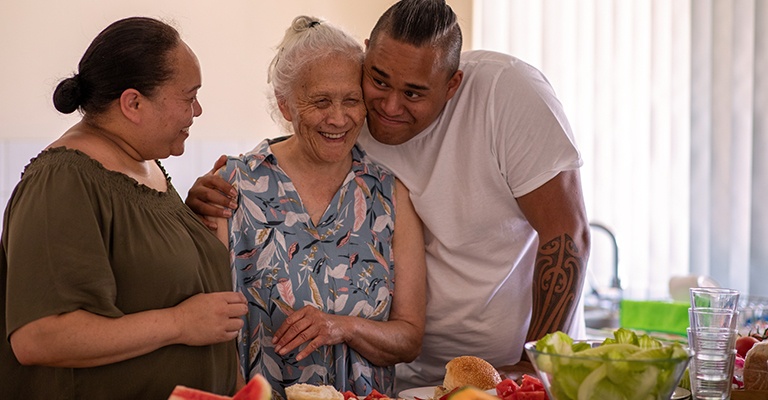
Counselling for Families
There's no roadmap when it comes to family. Family relationship counselling can provide your family with information, tools and strategies to help create a stronger and more harmonious family environment.
Related articles

Signs your relationship is unhealthy
Most relationships experience challenges, but sometimes patterns begin to feel unbalanced, unsafe or emotionally draining. You might notice a loss of connection, ongoing tension or a sense that your needs are no longer being met. Understanding the signs your relationship is unhealthy can help you make sense of what you’re experiencing, recognise early warning signs and decide what kind of support or next steps may be right for you.
Read More
Effects of divorce on children: how to support them through separation
When parents separate, children often experience a mix of emotions that can be difficult to understand or express. You may be wondering how much to say, what they need most, or how to protect their wellbeing through change. Understanding the effects of divorce on children can help you respond with greater confidence, reduce stress and create a sense of stability that supports their emotional and developmental needs over time.
Read More
Child-inclusive mediation
When parents separate, decisions about children can become complex and emotionally charged. It’s not always easy to understand what children are experiencing or how to include their perspective safely. Child-inclusive mediation offers a structured way to bring children’s voices into the process without placing responsibility on them. Understanding how this approach works can help families make more informed, child-centred decisions during separation.
Read More