- Separation Support
- Counselling
- Mental Health Support
- Relationship and Sexuality Education
- Relationship and Parenting Courses
- First Nations Services
Signs your relationship is unhealthy
Most relationships experience challenges, but sometimes patterns begin to feel unbalanced, unsafe or emotionally draining. You might notice a loss of connection, ongoing tension or a sense that your needs are no longer being met. Understanding the signs your relationship is unhealthy can help you make sense of what you’re experiencing, recognise early warning signs and decide what kind of support or next steps may be right for you.
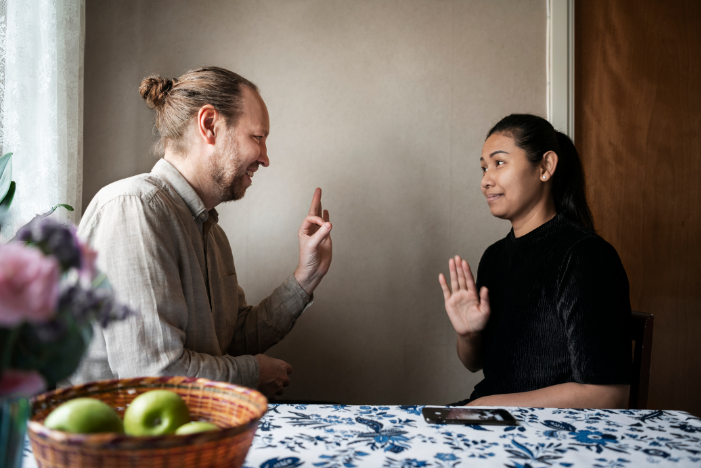
Most relationships go through difficult periods. Disagreements, stress and life transitions can all create strain.
But sometimes the patterns run deeper. If you’ve started looking for signs your relationship is unhealthy, it may be because something no longer feels respectful, balanced or safe.
You might be trying to work out if your relationship is unhealthy, or if you’re simply going through a challenging phase. Understanding the difference is important.
Not every struggling relationship is unsafe. However, certain patterns can signal imbalance, harm or control. Recognising those patterns early can help you protect your wellbeing and make informed decisions about what comes next.
Signs of an unhealthy relationship: what does ‘unhealthy’ really mean?
According to Michael Davy, Practice Specialist (Counselling & Groups) at Interrelate, unhealthy relationships tend to fall into three broad categories: abusive, unbalanced or unhappy and unfulfilled.
Unhealthy – abusive
This is the most serious category.
‘This is a relationship where one or both partners may be using abusive behaviours against each other,’ Michael says. ‘The most dangerous version is coercive control… and employs a pattern of abuse behaviours to control the other.’
Abusive behaviours are not just arguments or raised voices. They are patterns that cause harm. They may be physical, emotional, psychological or financial. They create fear. They reduce freedom. They can escalate over time.
A key difference between conflict and abuse is power.
Michael explains the distinction clearly:
‘Normal relationships have shared or equal power, even if there are power struggles. Abusive relationships involve power-over and unequal control.’
If fear drives compliance, if one voice dominates, or if your safety feels at risk, those are warning signs of an unhealthy relationship that should never be ignored.
Unhealthy – unbalanced or unstable
Not all unhealthy relationships are abusive. Some are deeply unequal without being driven by fear.
‘This is where there is some type of imbalance in the relationship,’ Michael says. ‘While not necessarily unsafe, there is a difference in the level of commitment, fidelity or contribution.’
This might look like:
-
serial cheating or broken boundaries
-
routine lying to avoid responsibility
-
addictions that compromise the relationship
-
one partner over-functioning while the other under-functions
Over time, this imbalance creates resentment and instability. It can feel like a parent-child dynamic rather than a partnership.
If you feel you are carrying the emotional, financial and practical load alone, or constantly trying to persuade your partner to change, these may be signs your relationship is unhealthy in ways that erode connection and fairness.
Unhealthy – unhappy or unfulfilled
Many people asking how to know if your relationship is unhealthy fall into this category.
Here, there may not be fear or overt control. But the relationship no longer feels emotionally safe or satisfying.
Michael describes common patterns:
‘They have formed negative patterns, where each person’s reaction triggers the other person’s reactions. One person tries to express their complaint, this is taken as an attack, and the other becomes defensive… and this intensifies until it becomes mutual criticism.’
Other signs include:
-
loss of personal sharing
-
defensive or reactive communication
-
blame-heavy language starting with ‘You are’ or ‘You never’
-
ignoring bids for connection
-
failing to repair after conflict
-
turning away from each other instead of towards
Perhaps the most common dynamic is the pursue-withdraw cycle.
As Michael explains, ‘One partner pursues more connection but becomes critical in frustration. The other withdraws to preserve calm. This increases the pursuit, which increases the withdrawal. A self-reinforcing cycle is made.’
This doesn’t automatically mean the relationship is beyond repair. But it does mean help is needed.
Early signs of an unhealthy relationship
‘Generally, these things aren’t immediately apparent in the relationship,’ Michael says. ‘Most couples experience some sort of honeymoon period.’
However, there are early signs of an unhealthy relationship that may suggest something more concerning.
These include:
-
heightened pressure to stop seeing friends or family
-
love-bombing paired with expectations of total commitment
-
feeling unreasonably guilty for ordinary independence
-
pressure to change who you are
-
subtle put-downs or reinforcement that you are ‘not good enough’
-
a lack of space for your voice in decisions
‘You start to feel inferior to the other person, and this seems to be something they are actively reinforcing,’ Michael explains.
A particularly important reflection question is: what happens when I say ‘no’ to something that doesn’t feel right for me?
If boundaries are ignored, dismissed or punished, that is not a small issue. It is a red flag.
How to know if your relationship is unhealthy or just struggling
All relationships face stress. Disagreements, misunderstandings and power struggles are normal. So how can you tell the difference?
Michael suggests focusing on key areas:
-
Power – is it shared, or is one person dominating?
-
Voice – do both people have a say?
-
Emotion – is there a range of feelings, or is fear present?
-
Risk – is there conflict without danger, or threat to safety?
-
Connection – are you isolated from others?
-
Resources – is access to money and independence restricted?
He also encourages self-reflection: ‘Notice what you’re feeling. What does this suggest to you? What place does fear of harm have in this?’
If your wellbeing is declining, your confidence eroding, or your world becoming smaller, these are significant signs of an unhealthy relationship.
When to seek support and what to do next
If you are in immediate danger, call Triple Zero (000).
If you feel at risk but not in immediate danger, contact 1800-RESPECT or a local domestic and family violence service as soon as it is safe to do so.
‘If you feel you are in an abusive relationship, finding out more information and talking this through with a professional can be very helpful,’ Michael says. ‘It can help you make sense of your experience and support you to work out how you can keep yourself and any children safe.’
If your relationship is unhappy or unbalanced rather than abusive, relationship counselling can help interrupt negative cycles and rebuild healthier communication patterns.
If you’re unsure where your relationship sits, speaking with a qualified relationship counsellor can help you understand your options and prioritise your safety and wellbeing. At Interrelate, we provide relationship and couples counselling, family counselling, individual support and family and domestic violence support.
If you’re questioning whether your relationship is unhealthy, you don’t have to work it out alone. Ask us how we can support you to build safer, healthier and more respectful relationships.
You might also be interested in

Counselling for Couples
A healthy relationship takes practice and a willingness to be open and vulnerable. Couples counselling provides a supportive space with an experienced counsellor for you to discuss and learn together.

Family and Domestic Violence in Relationships
Working towards breaking the cycle of domestic and family violence by providing nurturing support for those experiencing it including children.
Available in Port Macquarie, Greater Sydney, and Lismore.

Separation Support
If you are going through a separation chances are emotions will be high, it's often a time of confusion, anger, hurt and grief. You don't need to do it alone, we are here to help guide you through this time of change. We have a range of services available including counselling, mental health support and mediation to help guide you through.
Related articles

Red flags in a relationship
Not all relationship concerns are obvious. Sometimes it’s a feeling that something isn’t quite right, a pattern that keeps repeating, or behaviour that leaves you unsettled. Understanding red flags in a relationship can help you recognise when something may be unhealthy, while green flags highlight the signs of trust, safety and respect. Learning to spot both can support you to make more informed, confident decisions about your relationships.
Read More
Relationship breakdown signs
Sometimes relationships don’t end with one clear moment, but through gradual shifts in connection, communication and trust. You might notice growing distance, repeated conflict or a sense that something isn’t working anymore. Understanding relationship breakdown signs can help you make sense of what’s happening beneath the surface, so you can reflect on whether to repair the relationship or consider a different path forward.
Read More
Effects of divorce on children: how to support them through separation
When parents separate, children often experience a mix of emotions that can be difficult to understand or express. You may be wondering how much to say, what they need most, or how to protect their wellbeing through change. Understanding the effects of divorce on children can help you respond with greater confidence, reduce stress and create a sense of stability that supports their emotional and developmental needs over time.
Read More