- Separation Support
- Counselling
- Mental Health Support
- Relationship and Sexuality Education
- Relationship and Parenting Courses
- First Nations Services
How to separate while living together
Separating while living under the same roof can feel confusing, intense and hard to navigate. You may be balancing emotional distance with shared routines, parenting and financial realities. Understanding how to separate while living together can help you create clearer boundaries, reduce conflict and support stability for everyone involved. With the right structure and support, it’s possible to move through this transition in a more manageable and considered way.
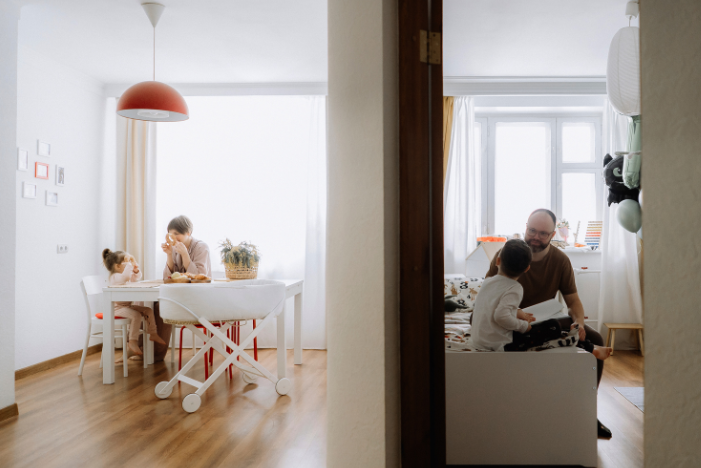
Separating doesn’t always mean moving out straight away. For many families, it’s simply not possible at first. Housing costs, parenting responsibilities, cultural expectations and practical logistics can all make living apart feel out of reach.
If you’re figuring out how to separate from your spouse while living together, you’re not alone. This arrangement can be a short-term stepping stone or a longer transition, but either way, it needs structure. Clear agreements, respectful communication and safety planning can make a significant difference for you and your children.
As Martin Meszaros, Practice Lead (Mediation Focus) at Interrelate, explains: ‘We’re seeing more separated parents who either mutually decide, or feel they have no choice, but to continue living under the same roof, and it’s important to distinguish between those two situations.’
For many people, the decision comes after a long period of uncertainty. Recognising the signs that a relationship may be over can help bring clarity about what happens next.
This article covers what ‘separated under one roof’ can look like, why couples choose it, and practical ways to manage daily life, boundaries, parenting, finances and support.
Can a couple separate and live in the same house?
Yes. Many couples separate while remaining in the same home, sometimes called ‘separation under one roof’. It usually means your relationship as partners has ended, even though you’re still sharing an address.
In practice, that might involve sleeping in separate rooms, running separate routines, dividing household responsibilities differently and changing how you spend time together.
Why do people choose it? Often, it’s a mix of necessity and care for the family’s stability.
Martin says that while housing affordability is a major factor, it’s rarely the only reason families remain under one roof after separating.
‘Lack of affordable housing and difficulty entering the rental market can make it significantly challenging to set up two households,’ he explains, particularly when parents are trying to stay close to schools, childcare and support networks.
Other reasons families may decide to remain living together after separation include:
-
Disagreements about who should leave the home, often driven by parents’ fears or perceptions about losing time with their children if they move out.
-
Cultural considerations, where parents may choose or feel compelled to stay under one roof to avoid stigma, ‘losing face’ with extended family or community, or disappointing children, in-laws or grandparents.
-
Plans to delay a full separation until children reach a certain age or level of independence.
-
Fear of leaving, which can be a significant factor in the context of domestic and family violence.
-
Logistical barriers, such as limited time to search for rentals or attend inspections, while managing work and parenting responsibilities.
-
Challenges re-establishing financial independence, which can make moving out feel risky or unmanageable.
-
Practical constraints for larger families, where affordable two- or three-bedroom rentals are unavailable, meaning moving out of the area may be the only option, with major impacts on school routines and care arrangements.
‘Sometimes there are disagreements about who should leave the home, and both parents end up remaining in the same property,’ Martin says.
In situations like this, independent legal advice can help clarify options and reduce misunderstandings.
Can a married couple separate and still live together?
Yes, and it’s more common than people realise. Some couples manage it well with clear agreements. Others find it emotionally exhausting, particularly if the separation is new or if one person is still processing the change.
‘Living in the same space after separation can intensify feelings of anger, disappointment or rejection, and it can extend the healing process,’ Martin says.
If you’re seeing each other every day, it can be harder to create the emotional distance you need to regroup and move forward.
It can also create confusion about roles. You’re no longer partners, but you may still be sharing parenting, household tasks and financial responsibilities. Martin describes a common pain point: ‘Shifting from being partners to being co-parents can create confusion about roles: meals, chores, groceries, who does what, when and where.’
When expectations aren’t spoken out loud, frustration may build.
If you’re considering this arrangement, it helps to be honest about what you can realistically manage. If things are escalating or one person feels unsafe, prioritising safety and seeking support is essential (more on this below).
If this feels close to home, you might want to pause here and take a breath.
Cohabitation and separation: practical steps that make it easier
If you’re separating while living together, the goal isn’t to do it perfectly. It’s to reduce uncertainty, lower conflict and protect everyone’s wellbeing, especially children. These practical steps can help.
Set clear expectations (in writing, if you can)
Try to agree on the basics early, even if it’s a simple list you update over time:
-
sleeping arrangements (separate rooms, shared spaces)
-
use of common areas (kitchen, lounge room, bathroom schedules)
-
household responsibilities (cleaning, cooking, laundry, yard work)
-
private time (when each person needs space)
-
visitors (friends, family and new partners and their children)
Martin advises: ‘Rather than making assumptions, it’s helpful to have deliberate, intentional discussions about the logistics of living under one roof if it’s safe to do so.’
Divide space as fairly as possible
If you’re in a small home, dividing space can be hard. If there’s only one living area or bathroom, agree on a routine so you’re not negotiating every day.
‘If you’re in a one-, two- or three-bedroom place, dividing bedrooms, living areas and bathrooms can be logistically challenging,’ Martin says. That’s exactly why predictable routines matter.
Create boundaries (physical, emotional and logistical)
Boundaries aren’t about punishment. They’re about making life more workable. You might set boundaries around:
-
communication style (no yelling, no personal attacks, no late-night arguments)
-
timing (set a weekly check-in instead of constant ‘on the spot’ discussions)
-
privacy (knocking before entering bedrooms, separate devices or accounts)
-
emotional expectations (you’re co-parenting, not processing the relationship daily)
If discussions get heated, it’s OK to pause. Martin suggests giving yourself permission to step back and return to it later, especially if you’re feeling overwhelmed.
Keep parenting predictable and child-focused
Children benefit from consistency, even when family life is changing. Where possible, agree on:
-
school routines and drop-offs
-
meals and bedtimes
-
extracurricular activities
-
how you’ll handle special events, birthdays and holidays
-
what you’ll say to children about changes in the home
If you haven’t told children about the separation yet, think carefully about how you’ll explain visible changes like separate bedrooms or different routines. Children notice more than adults sometimes assume.
Taking time to learn about co-parenting after separation can help children feel safer, reduce confusion and maintain a sense of routine during change.
Can a married couple be legally separated but still cohabit?
In Australia, separation is about the end of the relationship, not necessarily living at different addresses straight away. However, legal considerations can become complex, particularly around finances, parenting arrangements and the evidence needed to demonstrate separation.
Martin recommends seeking independent legal advice, particularly if there are fears or assumptions about what happens if one person leaves the home. He also notes that many families start by clarifying what’s shared and what’s separate and documenting these agreements very clearly.
Practical finance steps that often help include:
-
opening separate bank accounts (if appropriate)
-
agreeing on who pays what (mortgage or rent, utilities, groceries, children’s costs)
-
keeping a record of payments and agreements
-
setting a temporary budget while you plan next steps
This isn’t legal advice, but it is a useful reminder: a clear paper trail can reduce confusion and conflict later.
When you need extra support and how Interrelate can help
Sometimes, separation under one roof is manageable with the right agreements. Other times, it becomes unsafe or unworkable. If communication has broken down, conflict is escalating, or children are showing signs of distress, it may be time to seek outside support.
Martin says support can be important ‘when it is actually not safe to have dialogue… due to domestic and family violence, or drug and alcohol abuse’. If there’s intimidation, coercion, control or fear, prioritise safety and seek specialist help immediately.
Interrelate supports separating families through a range of services, including family dispute resolution and mediation. Martin says: ‘Mediation can provide scaffolding: guidance, structure and a neutral space to slow conversations down and focus on what’s important.’
Where appropriate, Interrelate can also offer child-inclusive mediation so children’s voices are heard in a safe, developmentally appropriate way, as well as counselling and additional specialist support.
If you’re working out how to separate from your spouse while living together, you don’t have to do it on your own. We can help you put structure around a difficult transition and prioritise the wellbeing and safety of everyone involved.
You might also be interested in

Thinking of Separating?
If you are going through a separation chances are emotions will be high, it's often a time of confusion, anger, hurt and grief. You don't need to do it alone, we are here to help guide you through this difficult time.


How to separate
This article explains how to separate, including emotional and practical steps, how to approach the conversation and when to seek support.
25 March 2026
Read MoreRelated articles

Signs your relationship is unhealthy
Most relationships experience challenges, but sometimes patterns begin to feel unbalanced, unsafe or emotionally draining. You might notice a loss of connection, ongoing tension or a sense that your needs are no longer being met. Understanding the signs your relationship is unhealthy can help you make sense of what you’re experiencing, recognise early warning signs and decide what kind of support or next steps may be right for you.
Read More
Effects of divorce on children: how to support them through separation
When parents separate, children often experience a mix of emotions that can be difficult to understand or express. You may be wondering how much to say, what they need most, or how to protect their wellbeing through change. Understanding the effects of divorce on children can help you respond with greater confidence, reduce stress and create a sense of stability that supports their emotional and developmental needs over time.
Read More
Child-inclusive mediation
When parents separate, decisions about children can become complex and emotionally charged. It’s not always easy to understand what children are experiencing or how to include their perspective safely. Child-inclusive mediation offers a structured way to bring children’s voices into the process without placing responsibility on them. Understanding how this approach works can help families make more informed, child-centred decisions during separation.
Read More