- Separation Support
- Counselling
- Mental Health Support
- Relationship and Sexuality Education
- Relationship and Parenting Courses
- First Nations Services
Educating boys about periods – building empathy instead of embarrassment
When it comes to educating boys about periods, the traditional solution to an awkward conversation has been to simply send them away. While the girls stay and learn about menstruation, the boys head off to do something else – quietly absorbing the lesson that periods are private, a bit embarrassing and none of their business. That split has had a cost. Including boys was never about teaching them to menstruate. It’s about empathy, respect and understanding – and raising a generation that treats menstruation as a normal part of life, rather than something to hide, mock or whisper about.
Do boys learn about periods in school?
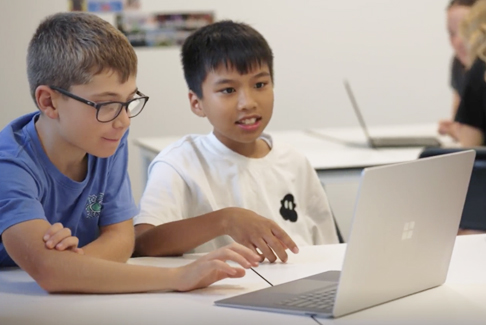
In many schools, period education is still delivered to girls, while boys are sent off to a separate activity. Even when boys do stay in the room, the conversation can be rushed, clinical or framed as something that only happens to girls. The result is a knowledge gap that starts early. Boys grow up unsure what a period actually is, why it matters or how to respond when a sister, friend or classmate has their period.
‘When boys aren’t included, menstruation can become something mysterious, embarrassing, a “girl thing” or even something to joke about,’ says Kristy Turnbull, Interrelate’s Practice Specialist in Relationship and Sexuality Education.
When we ran a series of national Think Tank sessions with experts, teachers and primary school students, the same pattern kept surfacing. Boys are routinely left out of meaningful learning about periods.
The real cost of leaving boys out
The cost isn’t abstract. It shows up in classrooms, in friendships and years later in adult relationships.
‘In classrooms, that can look like teasing, stigma or discomfort whenever periods are mentioned,’ Kristy says. ‘Girls may feel they need to hide period products, whisper about getting their period or feel embarrassed about a completely normal biological process.’
In our national Think Tank research, 42% of students said they felt embarrassed during period education. Leaving boys out doesn’t ease that embarrassment. It gives it more room to grow. In friendships, the gap creates barriers that don’t need to be there. Boys may not understand why a friend is feeling unwell, worries about leaking or needs to slip out to the bathroom. Without the language to respond with empathy, they respond with confusion, avoidance or a joke instead.
Where the exclusion shows up:
- teasing and stigma when periods come up in class
- girls hiding period products or whispering about their period
- friendships that miss empathy because boys were never taught
- adults who find it hard to talk about menstruation together
The part that follows kids into adulthood
The patterns set in childhood don’t always stay there. Women may feel awkward raising periods with a partner, and men may feel uncomfortable talking about menstruation because it was never normalised for them growing up. That discomfort affects communication and support.
‘Menstruation doesn’t just affect girls– it affects everybody,’ Kristy says. ‘Boys grow up to be partners, fathers, colleagues, managers, teachers and healthcare professionals.
‘When we teach boys alongside girls, we’re not teaching them to experience menstruation. We’re teaching them to understand and respect the experiences of others.’
‘But boys aren’t interested’ – tackling the objection
None of that is really in dispute – the sticking point is more practical. The most common pushback Kristy hears from parents and teachers is straightforward. Boys tune out, so why bother?
Her answer reframes the whole question.
‘We would never suggest girls shouldn’t learn about boys’ bodies or puberty because it doesn’t directly affect them,’ she says. ‘We recognise that understanding each other helps build respect and healthy relationships. The same principle applies here.’
The point was never that everyone will menstruate. It’s that we all know someone who does – a sister, a mother, a classmate, a future partner – and they all deserve the language to understand it.
‘Ultimately, teaching boys about periods isn’t really about periods,’ Kristy says. ‘It’s about empathy, respect and helping young people understand the world and the people around them.’
What happens when boys learn alongside girls
Adults often brace for awkwardness. What actually happens tends to be more interesting than that.
Boys learning about periods in the same room as girls changes the dynamic. ‘Boys can be shocked to hear that females bleed,’ Kristy says. ‘They can be really interested or completely uninterested – it just depends on the class.’
One realisation lands harder than most. As Kristy puts it: ‘What boys don’t realise is that without females menstruating, boys would not be here.’
Framed that way, a period stops being a “girl thing” and becomes a basic fact of being human – one every kid can understand, talk about and treat with respect.
How to start educating boys about periods
So what does getting it right look like? It starts with one simple shift. Include everyone, from the beginning.
That’s exactly why we built Cringe Quest– a free, interactive period education game made for the whole class. Girls, boys and kids who aren’t sure where they fit. Players make choices , see how different responses play out and hear period-positive language modelled instead of awkwardly delivered. No one gets sent out of the room.
A few small shifts go a long way:
- keep boys in the room when periods come up, every time
- use plain, matter-of-fact language instead of euphemisms
- answer questions without making a kid feel silly for asking
- model the calm, respectful tone you’d like them to pick up
At Interrelate, we’ve been teaching kids about periods for 100 years. The biggest thing we’ve learned is that leaving half the class out was never neutral – it taught shame by omission.
Educating boys about periods is how we change that. As Kristy puts it: ‘The goal is raising a generation that sees menstruation as a normal part of life rather than something to be hidden, mocked or misunderstood.’
For families, the conversation at home matters just as much as the one in class. Our Tricky Talks program brings students in Grades 3 to 6 together with a trusted adult to talk openly about puberty, the changes ahead, consent and protective behaviours – the kind of honest conversation that can be hard to start at the kitchen table on your own.
Beyond the classroom and the kitchen table, we offer broader relationship and sexuality education. Managing Menstruation is a guided 90-minute in-school session that gives students in Grades 3 to 6 the space to go deeper, while Moving Into the Teen Years covers the broader puberty and relationships ground for Year 5 and Year 6.
And for the questions that surface later, at home or halfway through dinner, our books 100+ Questions Kids Have About Puberty and 500+ Questions Kids Have About Sexuality answer the real things Australian kids have asked our educators over the decades.
Ready to see period education that includes everyone?
Cringe Quest is our free, interactive period education game built for the whole class, boys included. It takes 30 to 60 minutes, works best on a bigger screen and needs no sign-up.
You Might Also Be Interested In
Why we built a period education project for kids aged 8 to 12
Interrelate has been teaching kids about periods since 1926. Here’s the story behind Cringe Quest, our new, free period education project for 8 to 12-year-olds.
11 May 2026
Read MoreCringe Quest
Cringe Quest is a fun and free interactive game helping young people build confidence and understanding about menstruation through storytelling and real-life scenarios.
Managing Menstruation
Empowering young girls with knowledge and confidence around their menstrual cycle allowing them to manage this critical time of transition with ease.

Related articles
It’s time to stop the ‘Birds and the Bees’ talk – here’s why
If you don’t talk about sex, the internet will. The birds and the bees talk is failing today’s kids. If you’re still having “the talk”, you’re already too late. Find our why your child has already seen more than you think
Read More
Why we built a period education project for kids aged 8 to 12
Cringe Quest is the biggest evolution of our primary school menstrual education work in a decade. Launched on 28 May to coincide with Menstrual Hygiene Day, it’s a free, interactive period education project for 8 to 12-year-olds. A choose-your-own-adventure online game, it drops kids into real-life situations most period lessons skip and lets them work out what to say, do and ask along the way. Here’s the why behind it, and the story of how we, as a 100-year-old not-for-profit, ended up building a video game about periods.
Read More
How to talk to your kid about periods (and why you should start before they ask)
Wondering how to educate your child about menstruation? Here’s when to start, what to say and a simple five-step way to talk to your kid about periods. If the thought of explaining periods to your child feels a little daunting, you’re in good company. For many parents, this is a conversation we hope someone else will handle. If you’re a dad, chances are you’ll defer to your child’s mother.
Read More