- Separation Support
- Counselling
- Mental Health Support
- Relationship and Sexuality Education
- Relationship and Parenting Courses
- First Nations Services
100 Years of Working Together
As we mark our centenary, the third film in our documentary series, 100 Years of Working Together, explores a truth that runs through our entire history. We have never done this work alone. For 100 years, we’ve worked alongside others. Alongside families, communities and the generous people who believed in our mission and helped us keep going. Working together has never been just a slogan for our organisation. It has been the practical reality of how we’ve survived and grown since 1926.
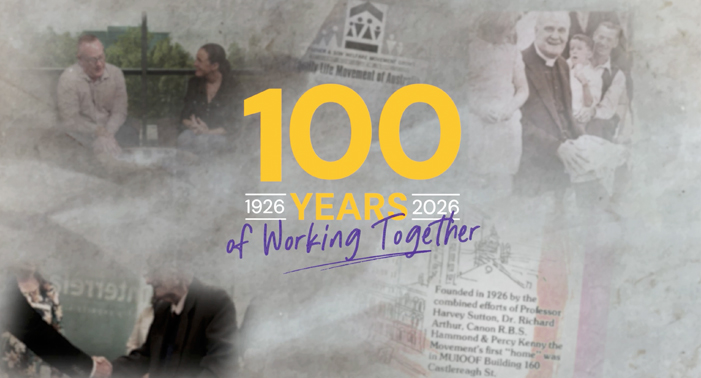
100 Years of Working Together
Series host and program lead Sarah Samild sits down with Interrelate CEO Graeme O’Connor to trace the partnerships that have shaped a century of support, from significant acts of generosity in the 1930s to the First Nations group guiding our work today.
The generosity that built an organisation
Behind a hundred years of family and relationships support sits a long line of generous people.
In the 1930s, Canon Hammond partnered with our organisation to offer free board and lodging for our director, Percy Kenny. That arrangement stayed in place until the 1950s. It was an early sign of something that would come to define us: the willingness of others to invest in our work and our willingness to accept help and put it to good use.
‘That generosity of passionate people has enabled us to be here today,’ Graeme reflects in the film.
Decades later, another partnership would prove just as enduring. In 1964, Dr Ron Bonamy, a GP in the Gymea area, offered Interrelate the use of a suite beneath his practice, completely rent-free. That arrangement continued until 1991.
Meeting Dr Ron Bonamy at 104
While making the film, Sarah went looking for Dr Bonamy. An online search turned up a centenarian celebration in Gymea. She discovered he was still in the community he had supported all those years ago, and that he was now 104 years old.
For Graeme, the chance to meet him in person meant a great deal. ‘Learning that he was still alive was just something that was really incredible,’ he says. ‘I really just wanted to meet him and hear some of his stories.’
In March 2025, Interrelate opened a custom-built space at Caringbah, and Dr Bonamy was welcomed in to see what his early generosity had helped create. ‘You’ve brought back a lot of memories,’ he said.
What struck the team most was his humility. Those close to him weren’t surprised at all, saying it’s just what he does.
When Sarah asked why he had given so much for so long, his answer was disarmingly simple. ‘Why not?’
‘Dr Ron really did set us up to embed ourselves as part of this community,’ Graeme reflects, ‘and because of that is why we’ve had the longevity we’ve had here.’
His parting advice carried the same understated wisdom that had shaped 27 years of support. ‘Keep on keeping on.’
Kutanya: walking together, hand in hand
Working together is not only about the partnerships that built our past. It also shapes how we work now, and few examples show that more clearly than Kutanya, our First Nations reference group – a recurring forum where First Nations staff come together to support how services are delivered to mob and community.
Kutanya grew from a recognition that genuine reconciliation cannot be designed from the outside. ‘If we really want to be true to reconciliation and supporting First Nations people, we need to engage with First Nations people,’ Graeme says. ‘We wanted to give First Nations people a voice. We wanted them to be able to guide us rather than determining that for ourselves.’
For Graeme, the result has been profound. ‘To see how Kutanya worked together is one of the highlights of my working life.’
Kutanya draws on a way of coming together that is far older than Interrelate. Ron Perkins, First Nations Community Development Worker, explains that different language groups have their own names for it. ‘What we used to call it around here is a keepara,’ he says. ‘All different mobs would come together and they would discuss issues that were affecting us. What I like about Kutanya is that it’s keeping that keepara alive.’
For those who are part of it, the group offers something that can be hard to put into words. Belonging.
Bronte Worsley, who grew up in Hong Kong without a connection to her Aboriginal culture, describes what it meant to find Kutanya. ‘Seeing how connected everyone is, and having this experience to come and meet everyone, was pretty cool. I’ve never had this in my whole life, so it was really nice.’
Madi Stanford puts it this way. ‘The connection, it just gives you so much, a sense of belonging. If you’re safe in yourself and your identity, this group provides that for us, then to go out and bridge that gap with non-First Nations people.’
That sense of foundation is what keeps people coming back. Janet Saunders has been part of the group for almost nine years. ‘I have seen the group change over time, but one thing that’s always stayed is the connection and the foundation of Kutanya,’ she says.
For Janet, the meaning of working together is simple. ‘It means first and foremost coming together. It’s walking together hand in hand, and it’s about the relationship.’
Each year, Kutanya members travel from offices across New South Wales for a single face-to-face gathering. ‘As Aboriginal people, we love connecting face-to-face and in person,’ Lachlan Skinner says. ‘It’s a really nice atmosphere when we come together. To be able to go home after that, you just feel like your cup’s full.’
As Ron Perkins reflects, that connection is nothing new. ‘People think that mobs were so disconnected from each other, but it wasn’t true. We’re always talking with each other, always trying to find solutions.’
Partnership, into the next 100 years
From Canon Hammond and Dr Bonamy to Kutanya, the through-line is clear. We have always been carried by relationships, and our future depends on them just as much as our past did.
'There are lots of community organisations right around Australia,’ Graeme says. ‘We do need to work together so that more people can have their needs met. We’ve always grown by partnering with each other internally as well. That partnership and that ability to work together, we’ll do that into the future as well.’
As we mark 100 years, the people and communities we walk beside continue to change. What stays the same is our commitment to walk with them.
Graeme concludes, ‘As society changes, relationships change, but that overarching purpose of help and support for people will continue, as it has for the last 100 years.’
Next in the series, we turn to the idea that has guided so many of these partnerships from the beginning, 100 Years of Putting Kids First.
Explore 100 Moments that shaped Interrelate
You Might Also Be Interested In
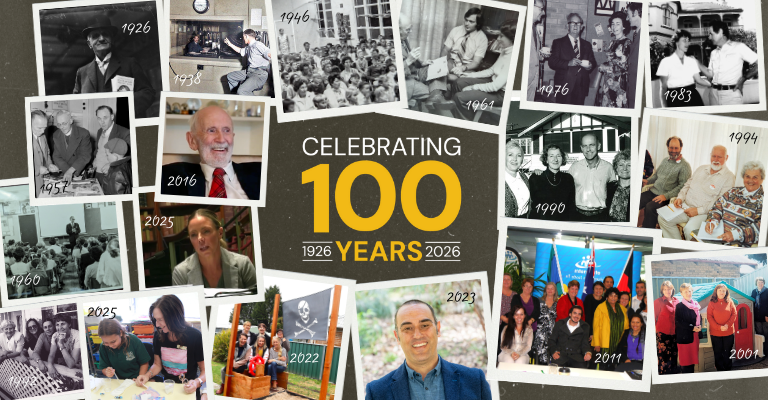
Celebrating 100 Years of Interrelate
In 2026, Interrelate marks 100 years of strengthening relationships across Australia. Our centenary honours the people and communities we’ve walked alongside, and looks ahead as we step into our next century.
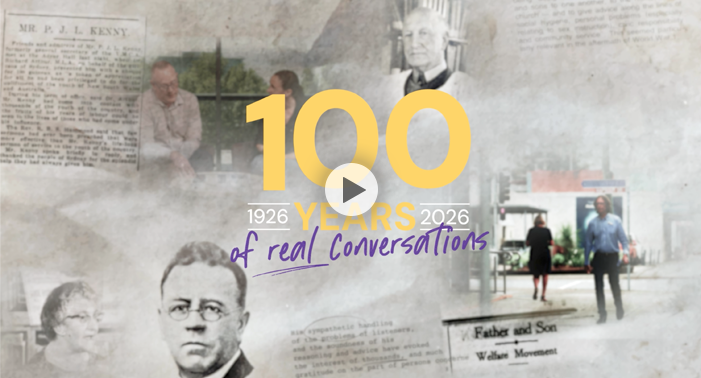
100 Years of Real Conversations
Watch the first film in Interrelate’s centenary series and explore how real conversations have shaped families and communities for 100 years.
01 February 2026
Read More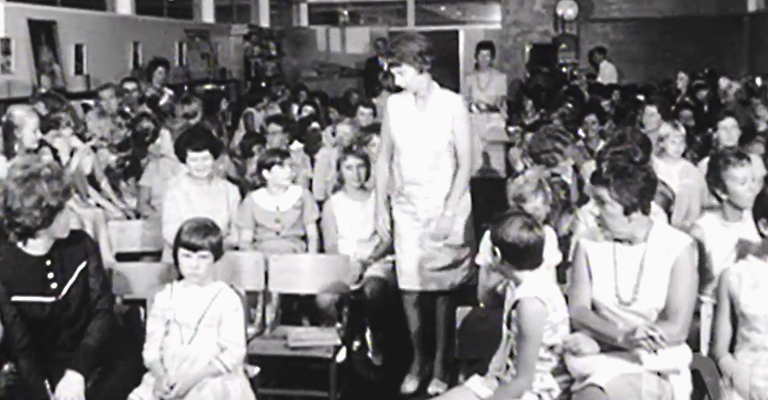
100 Moments that Mattered
Discover 100 moments that mattered in Interrelate’s 100-year history, tracing how care, courage and change shaped families across Australia.
01 February 2026
Read More
Related articles
100 Moments that Mattered
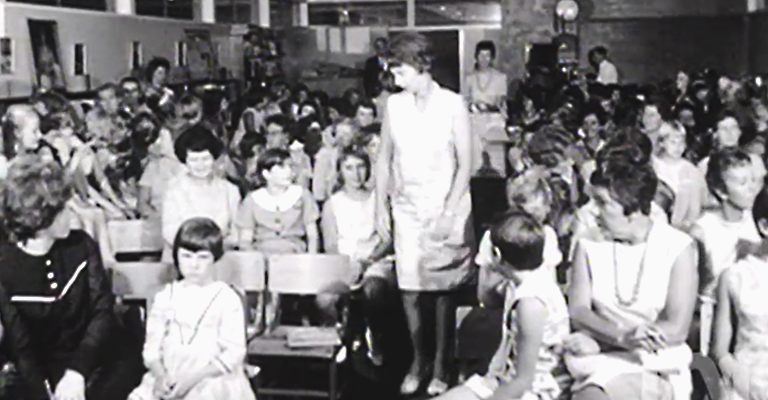
From a meeting in a Sydney department store in 1926 to national advocacy in Parliament almost a century later, our story is one of care, courage and constant evolution. The Interrelate 100 Moments timeline traces a living history of how we’ve grown alongside Australian families, responding to social change while staying anchored to one enduring belief: that healthy relationships matter.
Read More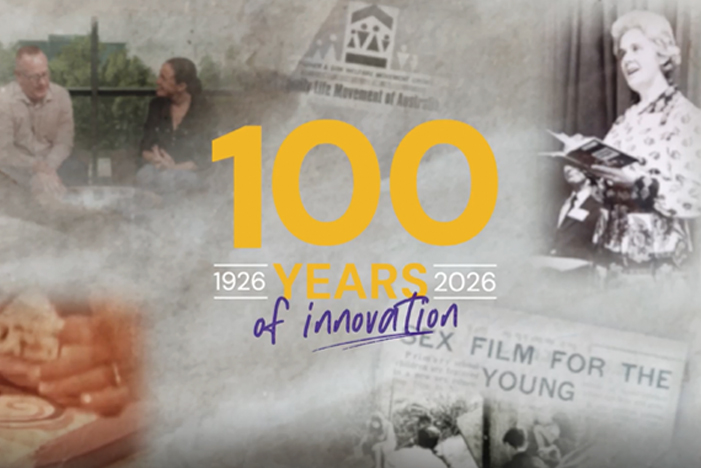
100 Years of Innovation
As we celebrate our centenary, the second film in our documentary series, 100 Years of Innovation, explores how Interrelate has spent a century evolving to meet the needs of a changing nation. Innovation at Interrelate has never simply been about adopting the latest tools. It has always been about the courage to respond to shifting social realities and to find new ways of delivering support that truly resonates with families.
Read More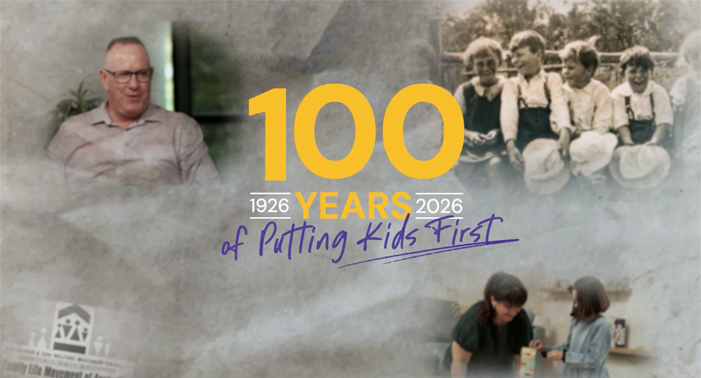
100 Years of Putting Kids First
As we mark our centenary, the fourth and final film in our documentary series, 100 Years of Putting Kids First, explores the principle that has sat at the heart of Interrelate since the very beginning. Long before children had a formal voice in the systems that shaped their lives, Interrelate was built around a simple conviction: that the wellbeing of children should come first, and that their voices deserve to be heard.
Read More