- Separation Support
- Counselling
- Mental Health Support
- Relationship and Sexuality Education
- Relationship and Parenting Courses
- First Nations Services
100 Years of Innovation
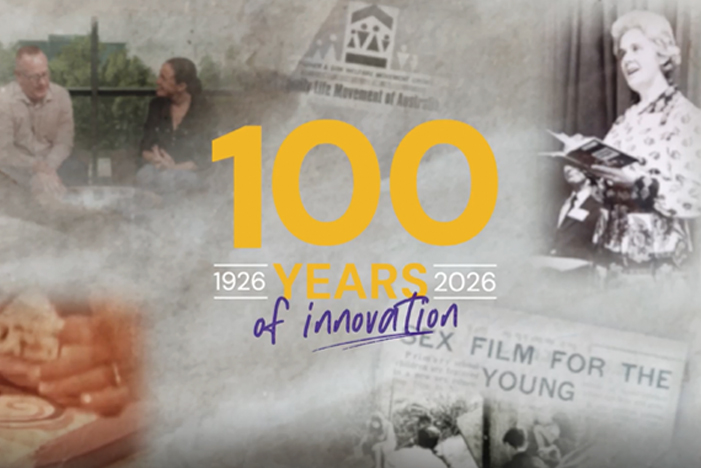
As we celebrate our centenary, the second film in our documentary series, 100 Years of Innovation, explores how Interrelate has spent a century evolving to meet the needs of a changing nation. Innovation at Interrelate has never simply been about adopting the latest tools. It has always been about the courage to respond to shifting social realities and to find new ways of delivering support that truly resonates with families.
100 Years of Innovation
In the second video, series host Sarah Samild and Interrelate CEO, Graeme O’Connor, show how Interrelate has consistently broken new ground. As Graeme reflects in the film, this pioneering spirit is not incidental.
‘Innovation is certainly something that's embedded in the DNA of the organisation,’ he says. ‘The fact that we've been able to be at that forefront and be willing to change has allowed us to exist for a hundred years and to continue beyond that in supporting families and communities.’
This conviction is not new. More than four decades ago, John Robson, who served as Director from 1945 to 1981, gave voice to the same idea in the 1981 Annual Report. He described an organisation that had widened its range of programs, reshaped its structure through two changes of name, drawn on insights from new disciplines and used modern technology, all to re-interpret its message in the light of new understanding. He captured it in a catch cry he had coined in the early 1970s: 'Modify and move or potter and perish.'
What began as instruction has become conversation
One of the clearest measures of Interrelate’s evolution over a century is how the nature of our work has shifted – not just in format, but in philosophy.
In the early decades of the organisation, guidance around relationships and sexuality was delivered in the language of instruction. Materials like the Guide to Virile Manhood reflected the social norms of the era: prescriptive, one-directional and focused on telling people what to think and how to behave.
Today, that same territory is explored through programs like Respectful Man, a 10-week course that creates space for men to examine their behaviour in relationships, build emotional awareness, and hold themselves accountable – through conversation rather than instruction. Respectful Man is the first program of its kind to integrate First Nations knowledge and culture with a therapeutic approach, a reflection of how far both our methods and our understanding have come.
As Sarah Samild puts it in the film, ’What began as instruction has become conversation.’
That shift – from telling to listening, from prescribing to exploring – captures an essential element of how Interrelate has grown.
Cringe Quest: when a talking tampon is the best teacher in the room
Fast forward more than five decades, and Interrelate’s most recent innovation in menstrual health education looks very different from that 1969 film reel. With support from the Modibodi Game Changer grant, Interrelate invested in developing Cringe Quest, a free online choose-your-own-adventure game designed for young people who have just started menstruating.
Developed in partnership with Activate Studios, Cringe Quest brings a cast of characters – including a tampon with eyes and legs – into scenarios designed to cover the full, messy, often awkward reality of what menstruation can feel like at the start. The goal is not just information, but engagement; not just facts, but confidence.
‘Gaming is certainly something that is really important to young people and kids,’ Graeme says in the video. ‘That is a great example of innovation and what we do.’
For the team at Activate Studios, the project was unlike anything they had worked on before. ‘The idea of connecting the world of menstrual education and gamification – it felt as unique as what it actually was,’ Ty Curtis of Activate Studios says. ‘To keep trying and experimenting and playing within this space is super important.’
Watching students use Cringe Quest for the first time, Sarah saw something that earlier forms of sex education rarely managed to achieve: smiles. ‘It's exciting to see it come to life after such an interesting creative process.
The journey from a 1969 film with a belt and napkin demonstration to a digital game where a talking tampon guides young people through their first period is, in many ways, the story of Interrelate's innovation in miniature – the medium changes, the message evolves, but the intent remains constant.
‘Interrelate has been providing this kind of education for a hundred years,’ Sarah reflects, ‘and now we're able to provide access to this kind of education to infinitely more people, which is a really exciting time to live in.’
Always at the forefront
Interrelate's history of innovation has not only been about technology. It has also been about shaping the professional landscape of family support itself.
When relationship counselling became a more formal profession in the early 1960s, Interrelate was among the first organisations approved to offer counselling under the Matrimonial Causes Act. Being at that frontier – recognised and accredited at a time when the field was still finding its shape – helped to establish the standards and credibility that have guided the sector ever since.
Innovation, in this sense, is not just about what is new. It is about having the foresight to see where support is needed and the commitment to build it, even before the systems and structures fully exist.
Follow our centenary story
As Interrelate marks 100 years, the world in which families live continues to shift. The challenges are different, the technologies are new, and the conversations we need to have keep evolving. What has not changed is Interrelate’s readiness to evolve alongside them.
‘As society changes, relationships change,’ Graeme says. ‘But that overarching purpose of help and support for people will continue, as it has for the last 100 years.’
Next in the series, we turn to the principle at the core of everything we do: Working Together. We’ll explore how Interrelate keeps collaboration front and centre – ensuring that even during times of transition and conflict, people are supported to work together with respect, clarity and shared purpose.
Explore 100 Moments that shaped Interrelate
You Might Also Be Interested In
Celebrating 100 Years of Interrelate
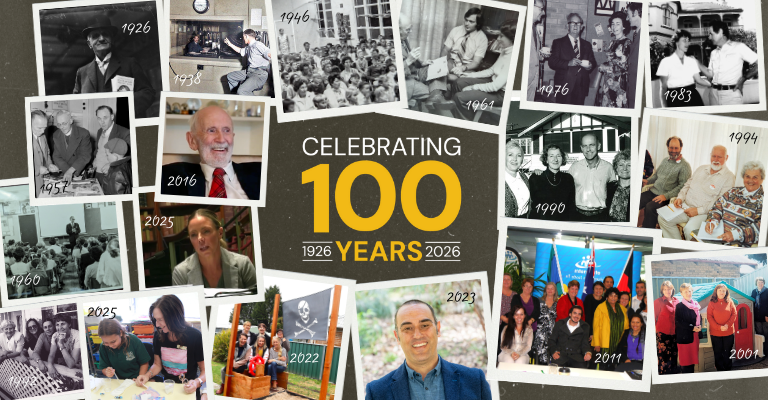
In 2026, Interrelate marks 100 years of strengthening relationships across Australia. Our centenary honours the people and communities we’ve walked alongside, and looks ahead as we step into our next century.
100 Years of Real Conversations
Watch the first film in Interrelate’s centenary series and explore how real conversations have shaped families and communities for 100 years.
01 February 2026
Read More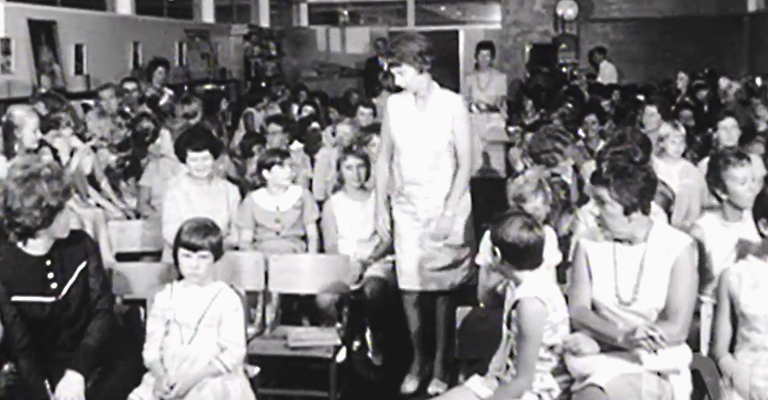
100 Moments that Mattered
Discover 100 moments that mattered in Interrelate’s 100-year history, tracing how care, courage and change shaped families across Australia.
01 February 2026
Read More
Related articles
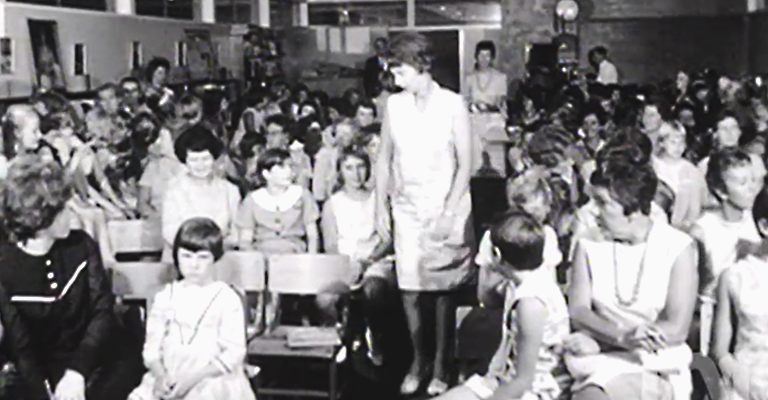
100 Moments that Mattered
From a meeting in a Sydney department store in 1926 to national advocacy in Parliament almost a century later, our story is one of care, courage and constant evolution. The Interrelate 100 Moments timeline traces a living history of how we’ve grown alongside Australian families, responding to social change while staying anchored to one enduring belief: that healthy relationships matter.
Read More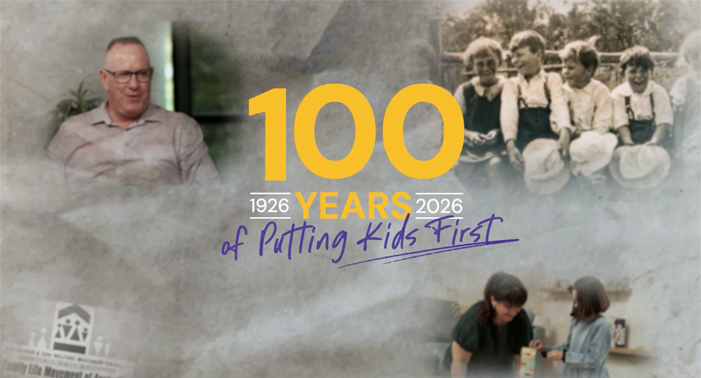
100 Years of Putting Kids First
As we mark our centenary, the fourth and final film in our documentary series, 100 Years of Putting Kids First, explores the principle that has sat at the heart of Interrelate since the very beginning. Long before children had a formal voice in the systems that shaped their lives, Interrelate was built around a simple conviction: that the wellbeing of children should come first, and that their voices deserve to be heard.
Read More