- Separation Support
- Counselling
- Mental Health Support
- Relationship and Sexuality Education
- Relationship and Parenting Courses
- First Nations Services
Reclaiming her voice: Charlotte’s story
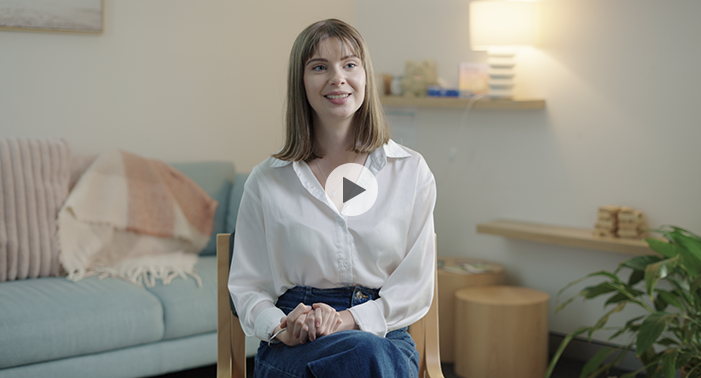
Charlotte Rose shares her experience of domestic and family violence recovery and how Interrelate helped her rebuild safety, confidence and boundaries.
PLAY >
At just 21, Charlotte Rose had already lived through years of psychological and emotional family violence. What she wanted most was simple but profound: to feel safe, to trust herself again and to believe in the possibility of healthy relationships.
Charlotte’s journey with Interrelate began after her mother accessed our Domestic and Family Violence (DFV) Case Management service during a family separation. Seeing the difference that specialist, trauma‑informed support made for her mum gave Charlotte the confidence to reach out herself.
In the video above and full screen below, Charlotte shares her story in her own words.
Finding the right support
When Charlotte first came to Interrelate, she and her mother were living in temporary accommodation after leaving the family home. Charlotte had tried counselling before, but she was looking for something different – support that truly understood domestic and family violence, particularly the non‑physical forms of domestic violence that are so often minimised or misunderstood.
“I went to Interrelate because they specialise in family violence and relationships,” Charlotte said.
Being able to name what she had experienced was a turning point. Learning that violence is about power and control – not personal failure – helped Charlotte begin separating the abuse from her sense of self.
“Violence is a choice other people make to control you,” she explained. “It’s not about you, and it’s not your fault.”
From the outset, our focus was on walking alongside Charlotte with care, consistency and respect. She was paired with one of our experienced DFV case managers, who worked with her to build safety, confidence and choice at every step.
“She made me feel welcomed and like she was talking to me as a person, not just a client,” Charlotte said. “That helped me open up because I knew I was with someone who actually cared.”
Charlotte also spoke about how the environment mattered – from the way she was greeted to the sense that everyone around her felt like “safe company”.
Learning tools for safety and boundaries
As Charlotte began to feel more stable day to day, she chose to join Shark Cage – an eight‑week group program that Interrelate facilitates for women recovering from abuse.
The program uses a practical metaphor to explore how to recognise harm, break the cycle of domestic violence, set boundaries and practise self‑care. For Charlotte, it became a toolkit she could carry into everyday life.
“We learnt about boundaries, how to identify abuse, what to do if we experience it, and how to heal from the past,” she said.
Just as powerful as the content was the group itself. Being alongside other women with shared experiences helped reduce isolation and build confidence.
“Going through it together helped build my confidence,” Charlotte said. “It was very different to just doing it on your own.”
The program changed how Charlotte approached relationships.
“I consider how I let people into my space, and I now have standards and expectations,” she reflected. “Good communication and recognising what’s healthy or harmful really matter.”
The protective ‘bars’ of the Shark Cage – boundaries, self‑respect and practical communication – became habits she continues to rely on.
Through this process, Charlotte began practising healthy boundaries and setting personal boundaries in relationships – skills that continue to support her safety and wellbeing.
Processing trauma and naming harm
After completing Shark Cage, Charlotte continued her healing through additional therapeutic support. This work helped reduce the emotional intensity of traumatic memories and strengthened her mental health.
“This therapeutic work gave me tools to develop better mental health and deal with the trauma,” Charlotte said.
Together, case management, group work and therapy created a holistic pathway: safety planning and advocacy, peer validation, and specialised trauma processing.
Charlotte also spoke openly about the impacts of non‑physical violence during her teenage years. Gaslighting, shaming and verbal abuse created a profound imbalance of power at home. Because there were no visible injuries, she didn’t initially recognise the harm.
Learning the language to describe emotional and psychological violence became part of her healing.
“Understanding that emotional and psychological violence is real helped me see myself in a better light,” she said. “It absolved me of feeling responsible for other people’s actions.”
From surviving to leading
As stability returned, Charlotte began using her voice in new ways – leading family and domestic violence rallies and creating peer support groups. For her, advocacy was not just about speaking out; it marked a shift from surviving to leading.
“Using my voice makes me feel empowered,” Charlotte said. “I’ve taken back control of the narrative of my life – it’s in my hands now, not in the perpetrator’s.”
She believes that speaking honestly about lived experience helps break cycles of harm and shows others they deserve to be heard and believed.
Another significant step was redefining safety in her personal life. Recognising ongoing patterns of control and the absence of healthy communication, Charlotte made the difficult decision to end contact with her father.
She described this not as punishment, but as self‑respect – a commitment to the standards she had set for her relationships, and a necessary step in creating space for healthier connections.
Looking ahead
As Charlotte reflects on her journey, it’s the confidence she built through Interrelate’s support that she is most proud of.
“I’m proud of pushing through – getting help, speaking up for myself and for other people,” she said. “It’s helped me form healthy relationships I once thought weren’t possible.”
Her message to anyone experiencing domestic and family violence is clear:
“There’s nothing to be ashamed of – it’s not your fault. Your experiences are valid, and it’s never too late to heal your relationship with yourself and with others. There is help.”
Charlotte’s journey shows the impact of integrated, survivor‑centred support:
- Domestic and family violence case management to build safety, advocacy and clear plans
- Shark Cage, providing practical education, peer connection and skills for boundaries and self‑care
- Therapeutic support to process trauma and build long‑term resilience
Together, these supports helped Charlotte move from crisis to stability, from silence to self‑trust, and from surviving to leading.
Her courage reminds us why Interrelate exists: to create accessible, evidence‑based services where people feel safe, listened to and believed – and where respectful relationships can take root and grow.
Need support right now? If you’re experiencing domestic and family violence, our specialist team can help you explore your options and feel safer. Contact us today.
Reclaiming her voice: Charlotte's story
PLAY >